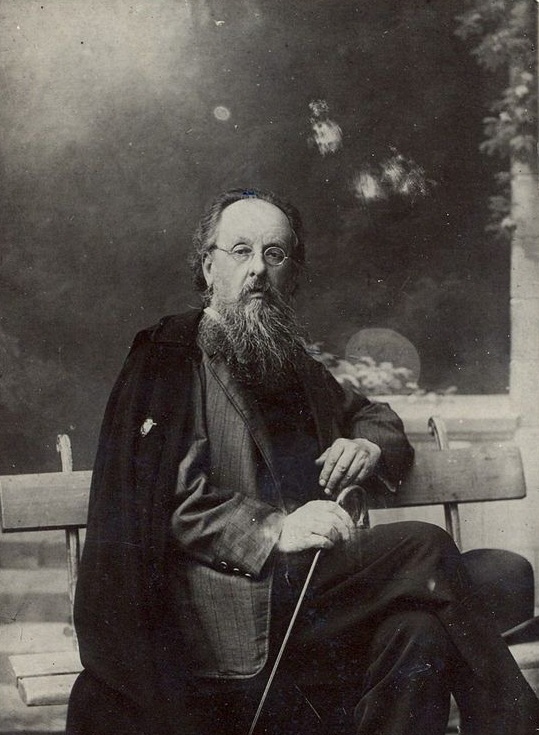
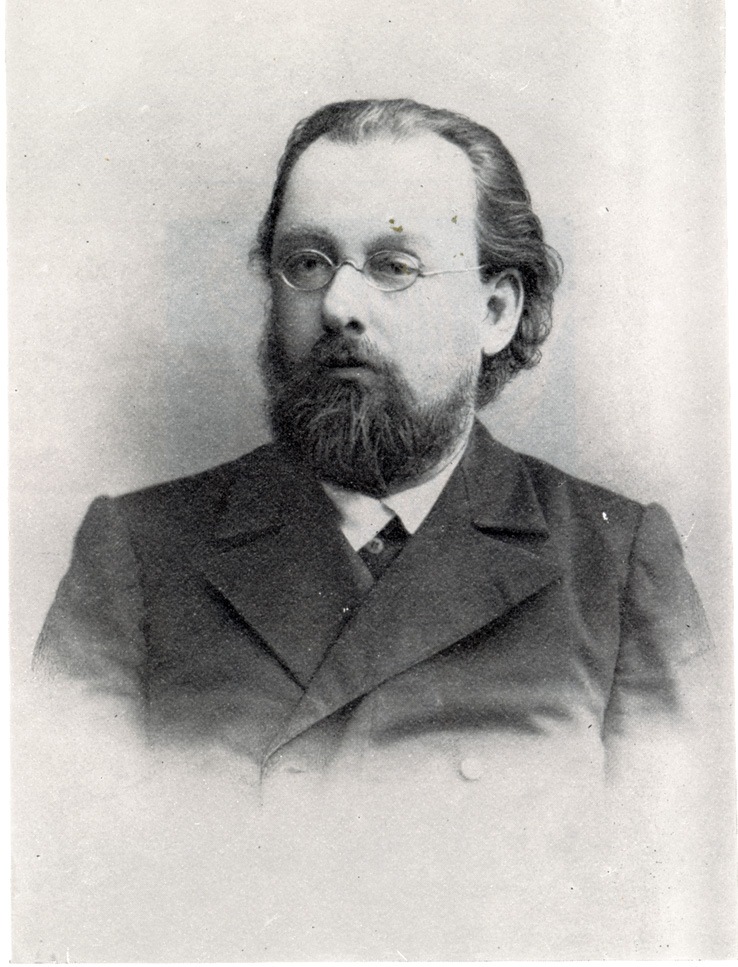
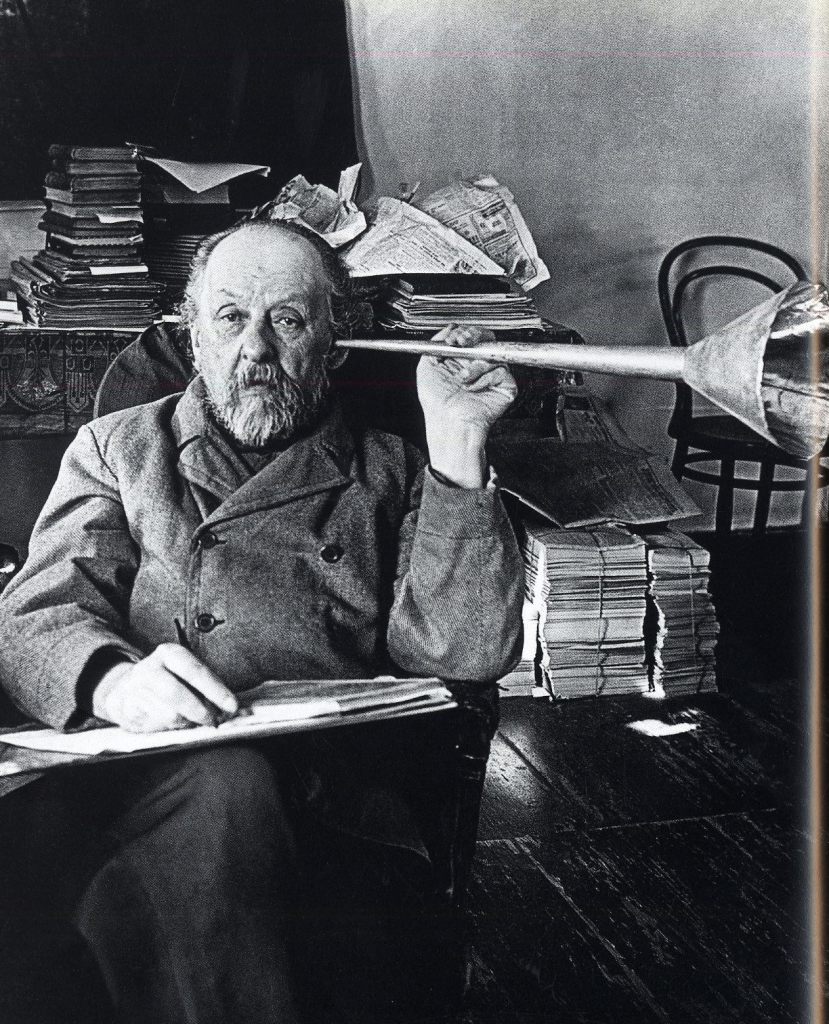
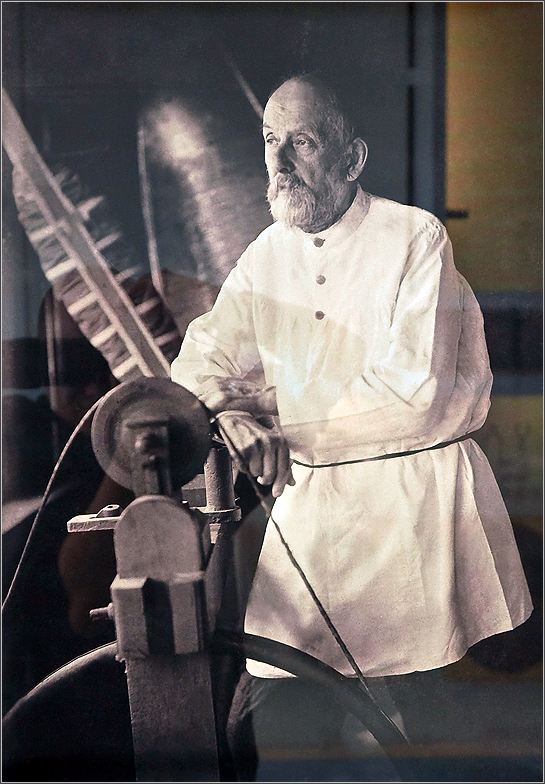
“Conditional Truth”, Konstantin Tsiolkovsky, 1932
There is no real (absolute) truth, because it is based upon total comprehension of space. But there is no such total comprehension, and there will never be. Science that gives knowledge continuously moves forward, it rejects or asserts the old and finds out the new. Every century changes science – does not reject, just changes its content more or less, deleting one and adding other. There will be no end to this process, as there is no end to centuries and to development of brain.
So, it means that truth can only be conditional, temporal and variable.
Religious faiths name their dogmas truth. But can any faith be truth? Faiths number in thousands. They conflict with one another, are often disproved by science and that is why cannot be taken even for conditional truth. Political beliefs also disagree more or less. Therefore, we will say the same about them. Philosophical musings created world-views. Their disagreement also compels us to view them as personal opinions. Some philosophers accepted nothing but exact scientific knowledge for their conclusions. But, similarly, their conclusions do not deserve the name of conditional truth, because did not agree inter se. Finally, there is not a single person that would not understand truth in his own way. So many men, so many truths. How can it be truth!
However, we should initially agree about what we want to denote by conditional truth.
Philosophers, sages and scientists, certainly, assist distribution of knowledge about the Universe and thereby refine people’s idea of conditional truth.
Conditional truth can be global, national, town, district, community, village, family and personal.
Personal conditional truth is what a man acquires in various ways and considers to be the best, the most correct and the most fair. Generally, it is the lowest sort of conditional truth. It changes with age and experience of a man. Village truth is the one which a village is ready to accept and submit to.
How can it be? A village, with a considerable majority vote (0.6, 0.7, 0.8, etc.), elects a person from this social environment whom it considers to be the highest in all respects. The village authorizes him to produce a code of truth, as far as he is able to do it. The approved code will be conditional village truth. Certainly, it changes with the change of the person elected. This truth yet stands some higher than personal views of ordinary villagers. I mean averages.
Electees from a few villages, who live together and know one another, authorize a special person from their environment, whom they consider the most intelligent, to search for truth. Thus a community truth is worked out.
Now it is clear how to create conditional truths: town, national and global.
All these truths will be conditional ones, because they disagree with one another, they are variable and imperfect. It is obvious that the highest truth will be global one, which is obtained by a man elected from all people, i.e. by all nationalities.
Maybe, some of personal truths (in general, those of the lowest sort) in fact will appear higher than the highest of the selected ones. But nobody can declare and prove it. And that is why for people truth would be what has been selected by their representative.
A man accepts only what he understands. Anything extra, enforced upon him, in his own eyes is confusion and violence, even if he is a thousand times wrong.
In point of fact, we have no authority to impose our personal truth on him, even truth of a city or country. He requires truth of the entire world, even of the whole Universe, if only it were possible.
The imposed truth will violate the world, provoke disagreement and dissatisfaction.
So, conditional higher truth is the truth generated by a village, then by a community, district, town, region, nation and, finally, by the electee from all nations.
How can I pass off my persuasions as truth and employ violence for this reason, if this truth has not been ratified by the whole world.
In such a way leaders, emperors, conquerors, and others behaved – and were mistaken. We should not follow them; we should humbly step back and let all the humankind elect and determine the truth.
It is only necessary that every society, having chosen the best person, had him periodically before their eyes and carried out incessant evaluation of him: if he changes to the worst – away with him at once.
For this person to be in the public eye all the time, there should be several electees from a group: one manage the community, and other go to elections to the top of society. Every electee spends a half of his time in his society, and a half in the higher one.
It is also needed that the high society should not be able to exclude him without consent of the lower. Certainly, the number of members of every community must be relatively small. So, the members can know each other, evaluate one another’s merit and make a right choice. From this point of view, the smaller the number of members, the better. But however, there should not be less than 100-1,000 of them. For this, average human memory and observancy will suffice.
There is no such thing as reasonable elections anywhere in the entire world. But if there were, our planetary truth would hardly be the highest. In practice, individual truth still takes control of the humankind. Hence the source of violence against humankind. This truth, on occasion, can be much higher than the common planetary one, and that is why can seemingly be justified. Here it looks like a supreme person rescues the rest of the humankind by force. In the same way a shepherd drives a herd and protects it from predators. Notionally it is conceivable, and something of the kind happens in history.
 You have read the article by Konstantin Tsiolkovsky.
You can download it for free in PDF format from the “The Collection of Works” section of the website. Unfortunately, most of Konstantin Tsiolkovsky’s works have not been translated into English. You can familiarize yourself with the works in Russian from the “Научное наследие” (“Scientific heritage”) section of the website.
Enjoy the reading!